How Open Source Seeds Can Increase Food Security
Keeping Seeds in the Public Domain

by BC Farms & Food  -  Permalink
March 22, 2023

Open source seeds increase food security by keeping seeds in the public domain.

Open Source Seeds

As community food movements bloom across North America, their efforts to provide food security face a nearly invisible threat from multinational seed patent holders like DuPont and Monsanto (Bayer)—the loss of public domain seed. Unlike traditional seeds, which have been passed down from generation to generation, patented seeds cannot be saved, replanted or shared by gardeners and farmers.
read more…

Growing a Patio Lemon Tree in Winter
How to Grow Lemons Outdoors Year-Round in a Northern Climate

by BC Farms & Food  -  Permalink
February 14, 2023

Want to grow fresh lemons on your patio in the winter? With a few simple protective measures lemon trees can adapt to outdoor year-round growing in a cool northern climate.

Video: Growing a Winter Patio Lemon Tree


For me, the best lemons grow in winter: fragrant blossoms and juicy, fresh citrus fruit when most everything else in the garden is cold and dormant.

I brought home my little potted Meyer lemon tree on a whim. The idea of growing citrus outdoors appealed to me. I’d heard that lemon trees are hardy enough to survive our Canadian South Coast British Columbia winters (plant hardiness zone 9).

Citrus trees are subtropicals that typically grow in warm, sunny places like California and Florida. Growing a subtropical lemon tree outdoors in the north takes extra work and care.
read more…

Roasted Sweet-and-Sour Beets

by BC Farms & Food  -  Permalink
December 22, 2022

RECIPE

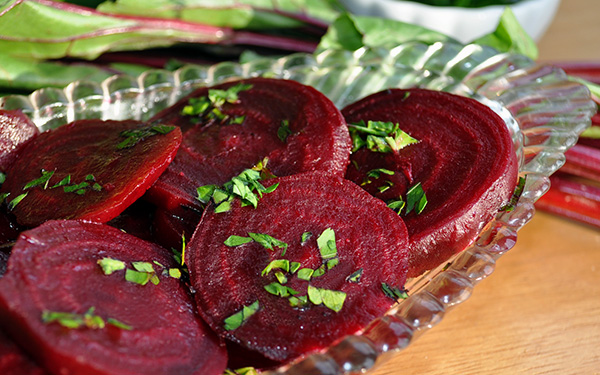
Roasting brings out the intensity of the beets in this tangy side dish. You can roast (and freeze) the beets ahead to save time, and prepare the rest in a quick 2 minutes! Choose baby beets for sweetest flavour. Roasted sweet-and-sour beets are good as an appetizer or as an accompaniment for almost any main dish.

Roasted Sweet and Sour Beets


read more…

15 Plants that Help Bees through the Winter
Cold Hardy Flowers, Trees and Shrubs that Benefit Bees

by BC Farms & Food  -  Permalink
November 20, 2022

You can help bees through the winter by growing plants and flowering trees that bloom during the colder seasons. (Article and plant guide continue below slideshow.)

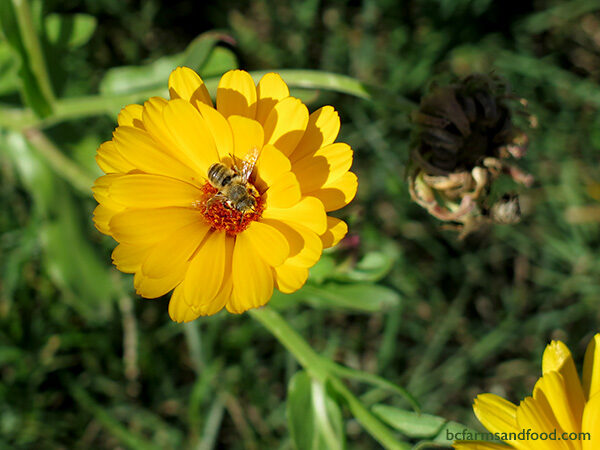
Calendula (Pot Marigold) reliably blooms until November in coastal areas. Cut back spent flowers for continued blooms. In mild years with no hard frost, calendula blooms all winter and provides early spring flowers for bees and flower flies.
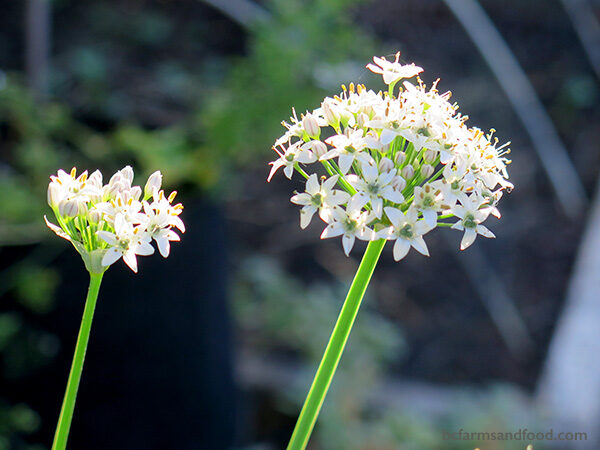
Garlic Chives, also called Chinese Chives, produce clusters of lightly-scented star-shaped flowers that attract bees and butterflies. Blossoms span from early summer to November. Hardy perennial herb.
Cornflower, also called Bachelor’s Button, blooms in late spring and continues until November or longer if weather is mild. This self-seeding annual is a good source of nectar, and attracts bees and other pollinators with its bright blue flowers. NOTE: Although commonly found in wildflower mixes, cornflower is considered an invasive plant in BC, so take care to grow it in only  in pots or confined areas.
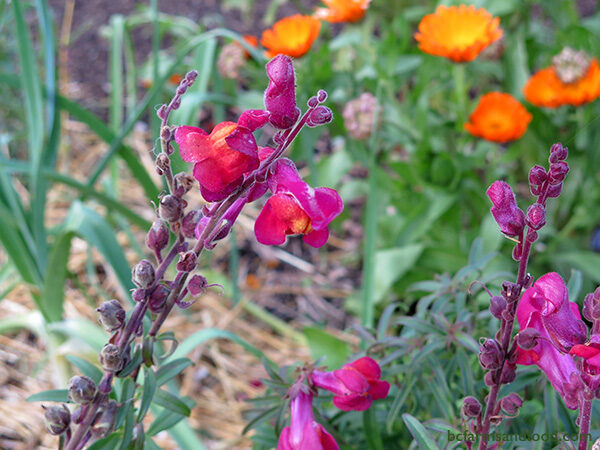
Snapdragons are usually grown as annuals, but can overwinter in mild winters. The lovely bright coloured flowers bloom in cool weather, spring or fall, and continue into November. Snapdragon is an attractive pollinator flower for bumblebees.
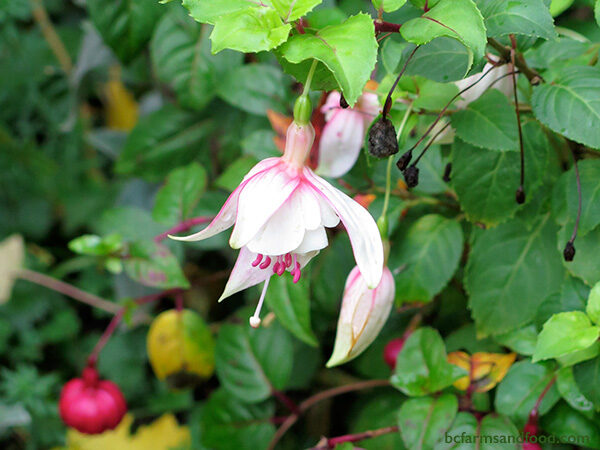
Hardy fuchsia blossoms provide a good source of nectar into the fall. The attractive hanging flowers supply food for bumblebees and hummingbirds. Hardy fuchsias bloom throughout the summer until November and the winter frost.
Borage is a hardy annual herb that flowers in June or July and continues into November. Borage does not survive a hard frost. Bees and other pollinators are attracted by the bright blue star-shaped flowers.
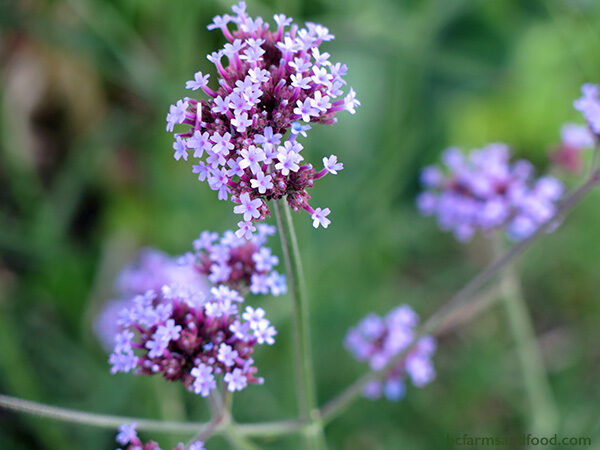
Verbena <i>bonariensis</i> (shown above) blooms from early summer to November. Its tall clustered blooms of tiny magenta flowers attract bees and butterflies. A perennial in zones 7–11, verbena can be grown as an annual in colder zones.
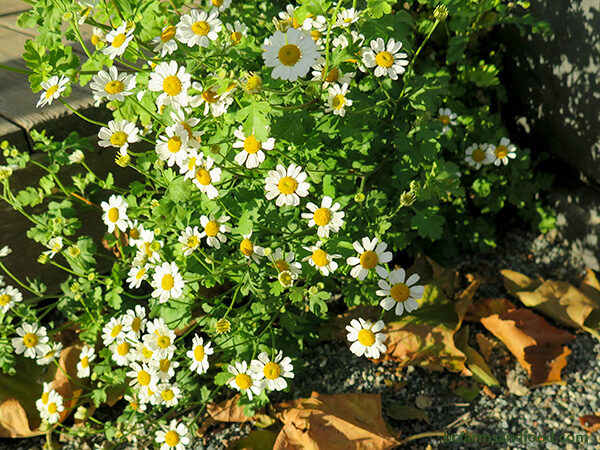
Chamomile is an annual that grows well into the cold season. The clustered daisy-like small white and yellow flowers, commonly used for tea,  are fragrant attractors for pollinators and other beneficial insects. Chamomile blooms from June to November. Self-seeding.
Yarrow's tiny close-packed flower clusters provide nectar for pollinators. Yarrow blooms from spring to November. Cut back the flowers after their first bloom for continued flowering. In mild years with no hard frost, yarrow will bloom in winter.
Rosemary has small blue flowers that attract bees. This hardy herb blooms at different times of the year, often in March, April or November. Prune this shrub after flowering, but not back to the bare wood. Flowers appear only on new wood.
Primrose, a hardy perennial, likes a cool, well-drained growing area. It is long regarded as a herald of spring. In south coast BC, primrose blooms from midwinter to spring, with a reprise in October or November.
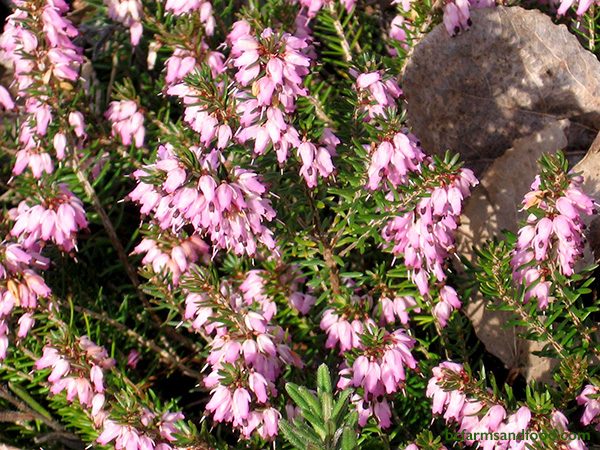
Heather brings colour in winter with tiny flowers that attract honey bees and bumblebees. This hardy perennial typically buds in November. However, an established heather plant can bloom from September to May.
Oregon Grape <i>(Mahonia aquifolium),</i> a tall evergreen native shrub with prickly, holly-like leaves, is a good early attractor for bees and other pollinators. Sprays of small yellow flowers bloom anytime from November through March.
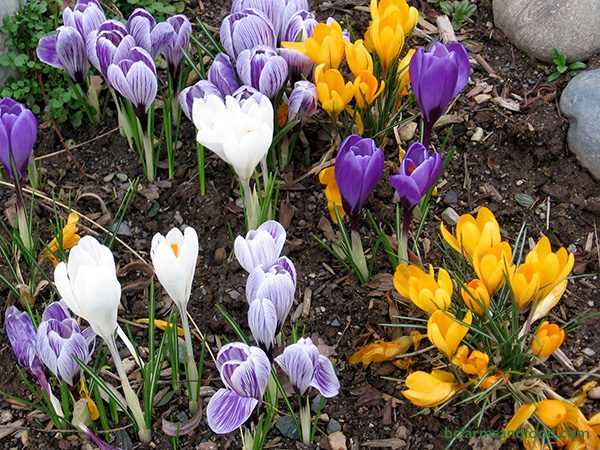
Crocus, Snowdrop and Hyacinth bulbs provide early nectar and pollen for honey bees. The flowers often open in late January and February, providing some of the earliest blooms of the season.
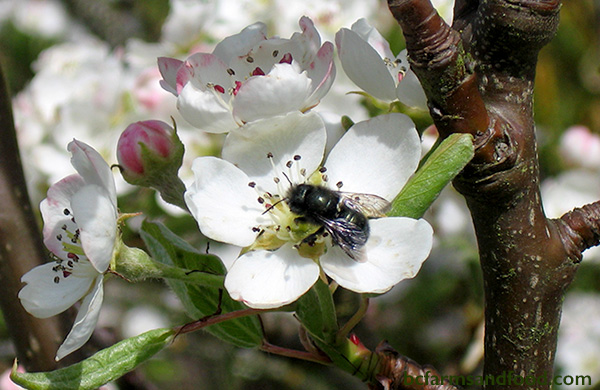
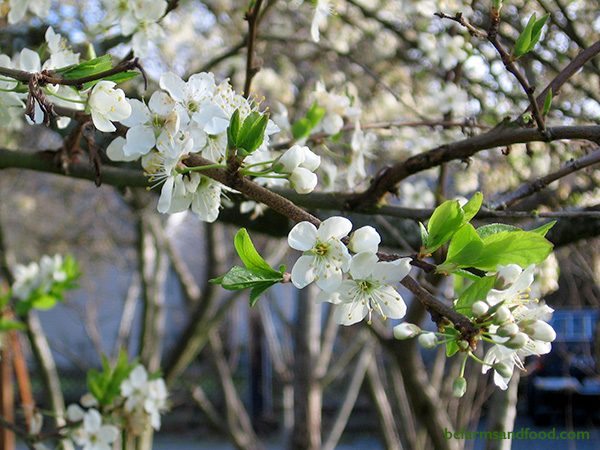
Early-blooming fruit trees such as cherry and apple trees flower in February. With each tree bearing hundreds of flowers, they provide a large concentrated food source for pollinators.
 
1/15
 
Calendula (Pot Marigold) reliably blooms until November in coastal areas. Cut back spent flowers for continued blooms. In mild years with no hard frost, calendula blooms all winter and provides early spring flowers for bees and flower flies.


read more…

Threshing Dried Beans
A Low-Tech Method for Small-Scale Growers

by BC Farms & Food  -  Permalink
October 15, 2022

Small-scale dry bean growers often lack the large equipment needed to quickly thresh their crop. In this video, Rebecca Jehn of Rebecca’s Garden in Victoria, BC, demonstrates a fast, low-tech method for threshing dried beans.
read more…

How to Make Oven-Roasted Tomatoes
Great for Tomato Sauce or Freezing

by BC Farms & Food  -  Permalink
September 20, 2022

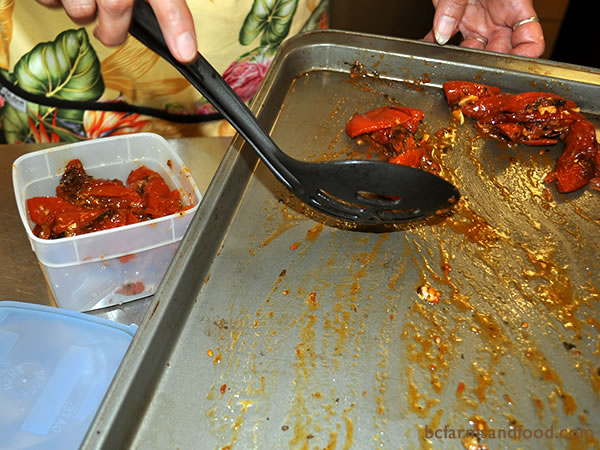
Oven-roasted tomatoes have a special sweet flavour that surpasses simple sauce.

Roasted tomatoes make excellent sauce or bruschetta, and are easy to freeze.
Core and slice the tomatoes into wedges.
Chop garlic and fresh basil (or other herbs) and add them to the tomatoes.
Drizzle extra-virgin olive oil over the tomatoes and garlic. Add black pepper.
Spread tomatoes on an oiled tray and roast for 45 minutes at 350ºF (175ºC).
The tomatoes are done when they are soft and just starting to brown.
Freeze when cool. For sauce, purée the roasted tomatoes in a food processor.
Roasted tomatoes make excellent sauce or bruschetta, and are easy to freeze.

read more…

City Food Gardens
Turning Lawns and Balconies into Food Gardens

by BC Farms & Food  -  Permalink
August 16, 2022

Food gardens are changing the landscape of modern cities. Urban gardeners are reinventing balconies, rooftops, and community spaces as places to grow fresh food.

Community gardens like this one at Oswald Park in Victoria offer a place to grow food in the city.

The edible city gardening movement is transforming front and back yards, curbside medians, school grounds and parking lots into active food growing areas. Spurred by a desire to save money on food and to eat fresh produce, gardeners are digging in wherever they can. Municipalities are carving out spaces for community plots.  Schools are planting student gardens to teach young people about the value of growing food and ways to mitigate climate change.
read more…

How Oregano Can Help Save the Planet
Culinary Herb Reduces Cow Belches and Greenhouse Gas Emissions

by BC Farms & Food  -  Permalink
May 24, 2022

oregano, a culinary herb that can help reduce methane emissionsCan a simple herb help fight global warming? The aromatic herb oregano, a staple in most modern kitchens, commonly meets our taste buds mixed with tomato sauce as a topping on pizza. This versatile plant’s virtues, however, extend beyond the kitchen into human and animal medicine. In 400 B.C., the Greek physician Hippocrates used oregano as an antiseptic and an aid to digestion.

Flash forward to today where oregano has emerged as a promising digestive aid for cattle. If you think this is not a major issue, consider the numbers. According to a UN report, livestock worldwide release 80 million metric tonnes of methane into the atmosphere. In the United States each year, 100 million cattle release 5.5 million metric tonnes of methane into the atmosphere — a significant 20 percent of U.S. methane emissions.
read more…

5 Classic Salad Dressings
Homemade Salad Dressing

by BC Farms & Food  -  Permalink
April 25, 2022

RECIPES

Homemade salad dressing greatly surpasses any you can buy in the store. Fresh herbs and lemons, quality oils and full-flavoured vinegars make all the difference. Here are five classic salad dressings to make at home: Honey Mustard dressing, Basic Balsamic Vinaigrette, Italian dressing with fresh herbs, Ranch dressing, and Sesame Ginger dressing.

A fresh green salad with five classic salad dressings: honey mustard, balsamic vinaigrette, ranch, Italian and sesame ginger.

Five classic salad dressings you can make at home: (left to right) Honey Mustard dressing, Balsamic Vinaigrette, Ranch dressing, Italian dressing, and Sesame Ginger dressing.


read more…

Know Your Flour: Traditional and Gluten-Free
A Guide to How to Use Different Kinds of Flour

by BC Farms & Food  -  Permalink
January 4, 2022

Know Your Flour: traditional and alternative gluten-free flourWhether you use traditional or gluten-free flour, you’ve probably noticed that all flours are not the same. Made from grains, nuts, legumes, roots and seeds, they vary in texture, flavour, density and nutritional make-up. Knowing the qualities of different flours will help you choose the best for the bread, cake, muffin, cookie, pastry, pasta, or sauce you want to make.

Whole grain flours contain protein and other nutrients. People on vegan diets often rely on whole grain flours as a source of protein.

The guide below outlines how to use traditional and alternative gluten-free flours.
read more…

Pumpkin Pancakes

by BC Farms & Food  -  Permalink
September 26, 2021

RECIPE

Pumpkin Pancakes are an easy, satisfying way to cook fall pumpkin or squash.

Hot pumpkin pancakes on the griddle. Pumpkin Pancakes recipe.

This is easily my favourite way to eat pumpkin. Hot and delicious, these tiny pumpkin pancakes never last long at our house. This recipe works with almost any kind of canned pumpkin or winter squash puree. Or, you can make your own fresh pumpkin puree (see how in this Pumpkin Apple Bread recipe).
read more…