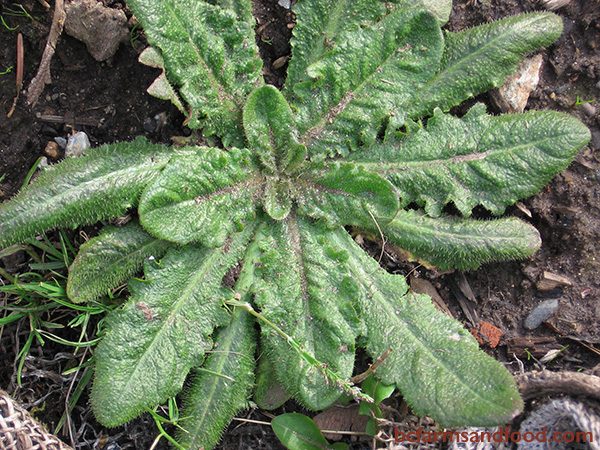
Cat’s Ear, also called False Dandelion, has tall yellow flowers similar to dandelion, and rounded, hairy leaves (unlike dandelion). Cat’s Ear typically indicates dry, free draining soil, but will also grow in moist areas.
Dandelion typically indicates heavy, compacted, acidic soil, but also grows in fertile well-drained areas. Dandelion's long taproots bring up calcium and other minerals from the subsoil. These can enrich the garden as dandelion decomposes.
Daisy (Bellis perennis) indicates dry, well-drained soil with low fertility. This low-growing plant with lobed leaves and small flowers is commonly found in lawns with worn-out neutral or acidic soils.
Plantain indicates acidic, compacted, low-fertility soil. Rich in calcium and magnesium, this wild plant also accumulates silicon, sulphur, manganese and iron. Decomposing plantain helps to alkalize the soil.
Buttercup indicates acidic, poorly-drained soil. Buttercup produces a toxin called protanemonin that may suppress growth of adjacent plants. Creeping buttercup draws potassium from the soil.
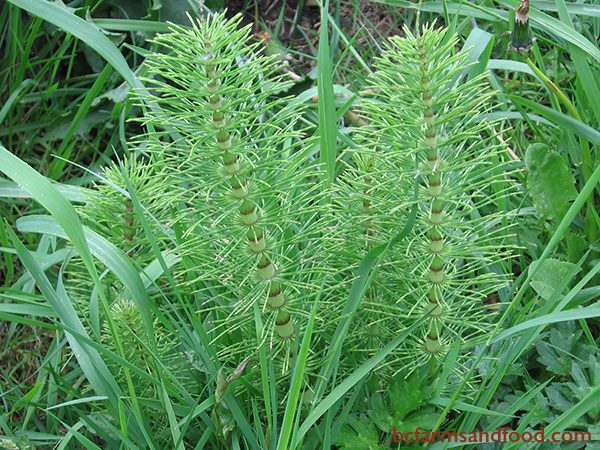
Horsetail indicates light, sandy, slightly acidic soil, and grows in moist conditions. Horsetail accumulates silicon, calcium, magnesium, and iron, which it releases back into the soil as it decomposes.
Chickweed grows in neutral, moist, sometimes heavy soils. Healthy chickweed indicates cultivated, fertile soil. Chickweed accumulates potassium and phosphorus which enhances the soil when it decomposes.
Purple Deadnettle, a member of the mint family, often indicates neutral, nutrient-rich soil. Deadnettle can grow in heavy clay areas, but prefers loamy soil. Purple Deadnettle is a valuable attractor of pollinators in early spring.
Sheep Sorrel indicates acidic, low fertility soil. Sheep sorrel accumulates calcium and phosphorus, minerals that de-acidify the garden. Composting sorrel helps to alkalize the soil.
Thistle indicates compacted, heavy, acidic soil. Its roots penetrate deeply and help break up the subsoil. Thistle’s roots bring up iron and moisture for use by shallow-rooted plants. Thistle is often indicative of dry areas.
Bindweed indicates poorly drained, compacted, often crusty soil. Bindweed has a deep and extensive root system which stores nutrients for regrowth. Although it can grow in a range of conditions, bindweed prefers heavy clay soil.
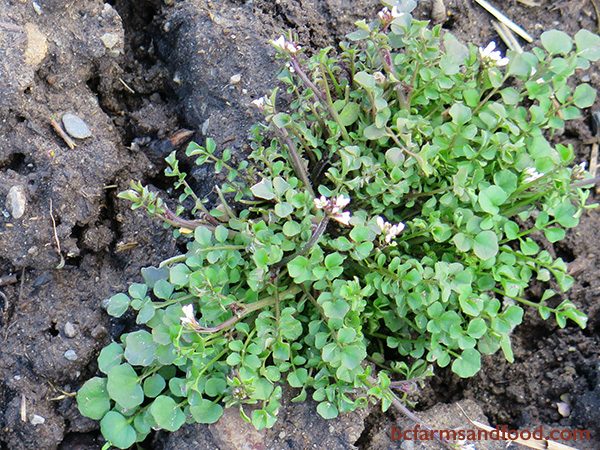
Hairy Bittercress, a member of the mustard family with tiny white flowers, indicates poorly-drained, moist soil. Hairy Bittercress commonly grows in disturbed areas and is most prolific in early spring.
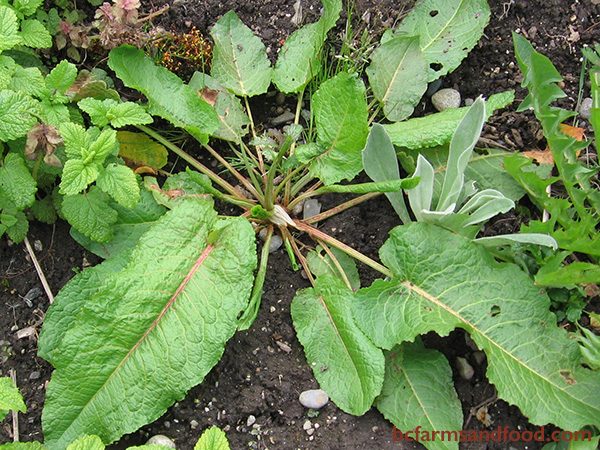
Dock indicates heavy, poorly-drained, waterlogged soils with increasing acidity. Dock has deep taproots that break up the subsoil. Dock draws up calcium, potassium, phosphorus and iron which is released into the soil when composted.
Quack Grass indicates heavy clay or crusty soil with poor drainage. Quack Grass has a net-like root system that helps control erosion on steep banks. Quack Grass accumulates potassium, silicon and other minerals.
Clover typically indicates moist, poor-fertility soil, that is low in nitrogen. It also indicates soil that is rich in potassium. Clover draws nitrogen from the air and fixes it into the soil when tilled under.
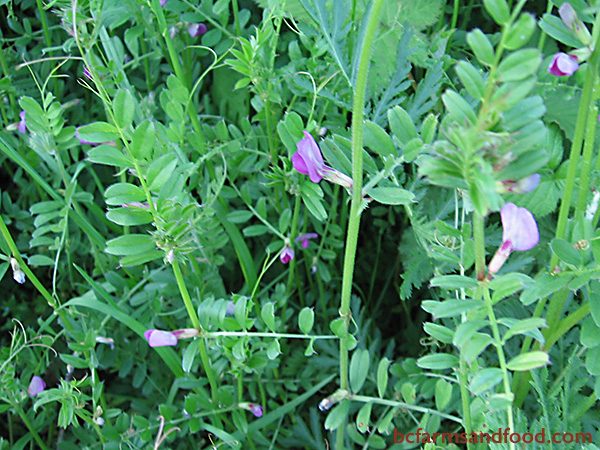
Vetch indicates poor fertility soil, low in nitrogen. A member of the pea family, vetch obtains nitrogen from the air and fixes it into the soil when tilled under. Vetch accumulates phosphorus, potassium, and other minerals, which can enrich the soil when composted.










 British Columbians often give several reasons why local food is the best choice for everyone: Locally grown food tastes better, has greater nutritional value, protects the environment, strengthens genetic diversity, and develops the local economy. The last point raises an important question. How much can local agriculture do for a local economy?