RECIPE
This summer lemonade from The Waste Not, Want Not Cookbook by Cinda Chavish works well with ripe, juicy raspberries, as well as with fresh strawberries or blackberries.
This summer lemonade from The Waste Not, Want Not Cookbook by Cinda Chavish works well with ripe, juicy raspberries, as well as with fresh strawberries or blackberries.
Kohlrabi’s crunchy texture and mild cabbage flavour make it an excellent choice for slaws. This simple slaw uses sweet carrots and fresh kolhrabi to create a refreshing Asian style salad.


Bob Duncan of Fruit Trees and More has pioneered ways to cultivate kiwis, oranges and other subtropical fruit on Vancouver Island.
Scientific studies have long hailed a Mediterranean diet of oranges, olives and subtropical fruits, along with vegetables, nuts, legumes and grains, as one of the healthiest in the world. Until now, however, British Columbia food distributors have had to import most of these subtropical foods from California and Mexico. While growers in BC are able to produce some Mediterranean vegetables, such as tomatoes and peppers, citrus fruits have been seen as unsuited to the growing conditions in this region.
Thanks to the pioneering work of Bob and Verna Duncan of Fruit Trees and More, a demonstration orchard and nursery in North Saanich, BC, citrus fruits, olives, figs and pomegranates are now within reach of backyard gardeners and farmers.
read more…
By using microclimates, partial shelters, an unheated greenhouse, and by choosing varieties best suited to the south coast BC climate, Duncan has found ways to grow subtropical fruits that normally could not thrive in this northern climate. The video includes tips on how to grow Mediterranean figs, lemons, oranges, olives and loquats, as well as warm weather fruits and nuts such as peaches, nectarines, almonds and apricots.
More articles:
 A Low-Carbon Citrus Greenhouse in Canada
 Growing a Patio Lemon Tree in Winter
 Teafarm Brews Up a New Crop for Canada
 Grow a Climate Change Resilient Garden
 10 Tips for Year-Round Vegetable Gardens
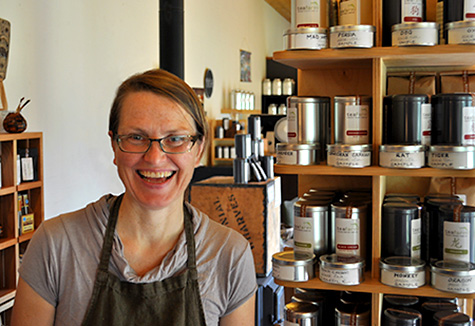
Margit Nellemann at the Teafarm on Vancouver Island.
On a sunny slope in the Cowichan Valley on Vancouver Island, a rare Camellia is growing; rare for Canada but widely sought worldwide for its stimulant qualities. It is Camellia sinensis, better known as tea.
Far from the tropical and subtropical mountain slopes of China and India where much of the world’s tea is grown, and running contrary to Agriculture Canada’s declaration that “Canada does not have the appropriate climate for growing tea,” the 11-acre Teafarm, in Cowichan, is home to 600 thriving tea plants, adapting nicely to the region’s Pacific maritime climate.
read more…
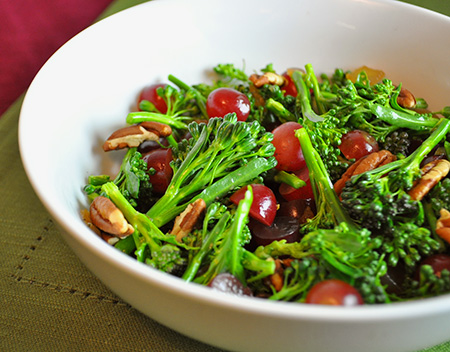
This lovely red and green salad is as attractive as it is delicious. Broccoli, red grapes, sauteed onions and toasted nuts come together in this sweet and tangy side dish. An exceptional addition to any meal.
 Think of this— a bubbling pot of maple baked beans on a cold, rainy day. It’s Canadian comfort food. After all, Canada is one of the world’s leading producers of pulses: dry beans, peas, chickpeas and lentils. A trip to the local supermarket, however, tells another story.
Look for the source of the conventional or organic dry beans you buy packaged, canned or in bulk and you won’t see “product of Canada.” More often than not, the beans and chickpeas you eat come long distances from China, Thailand, India or maybe the U.S.
read more…
Infused with rosemary and virgin olive oil, these creamy baked beans make a hearty meal or side dish.
 It’s no secret that Canada’s food growing system is heavily invested in pesticides. These chemicals are dangerous environmental pollutants because of their long-term effects on living organisms, including humans. Many Canadians try to avoid eating foods grown with pesticides by choosing “organic,” which promises no or extremely low chemical residues.
Now, a CBC News analysis of data from the Canadian Food Inspection Agency (CFIA) reveals these hopes may be misplaced.
read more…
This quick dip is an easy, delicious way to eat more Omega-3s. Serve with breadsticks, crackers or raw vegetables. Walnut garlic dip tastes especially good with ripe, sweet cherry tomatoes.